Equipment
You have never chunked a putt. Not one, in your entire golfing life.
So why does a 12 yard chip make your hands go cold? It is not your technique, and it is not your talent. It comes down to four design decisions built into the wedge you are holding. Here are all four, and what to do about them.


Ask any teaching pro where golfers lose the most strokes and you get the same answer every time. It is around the greens.
Not off the tee. Not on the 7 iron. Around the greens, inside 50 yards, on the shots that look like nothing.
You know exactly how it goes. You are having a great round. Then you face a simple 10 yard chip, and you chunk it fat. The ball moves five feet. Double bogey. Round ruined.
One chunked chip here, one bladed pitch there, and suddenly a bogey turns into a double or a triple.
Now think about the shot you never miss
When was the last time you chunked a putt?
Never. Not once. You have stood over thousands of putts and not a single one dug into the turf, jumped off the face, or squirted 20 feet right of your line.
That is not because putting is easy. It is because the putting stroke is simple and repeatable. Straight back, straight through. No wrist flip, no digging, no decision about how far down to choke the grip. You only have to think about two things, speed and line.
Then you walk 15 feet off the green, pull a wedge, and everything you just trusted goes out the window.
You have never chunked a putt, so why not use that same stroke for chipping? From a Top Speed Golf ad running right now
Three shots inside 50 yards, and where your strokes actually go
Before we talk about equipment, be honest about which of these three costs you the most. For most recreational golfers it is all three, several times a round.
Shot one
The tight lie just off the fringe
Ten yards of fairway between you and the green. There is no cushion under the ball. A sharp leading edge on hard, tight turf gives you a margin measured in fractions of an inch: a hair too steep and the club digs, a fraction too shallow and you catch it thin and scream it across the green.
Typical damage: one shot that finishes 40 feet away, then two putts. A routine par turns into bogey.
Shot two
The pitch out of thick rough
Now the grass grabs. A narrow sole snags in tangled grass on the way down, the face twists, and the ball comes out with no speed and no direction. So you make the classic amateur correction: you decelerate, try to save it at the last second with your hands, and go from chunk to thin on the very next attempt.
Typical damage: you are still not on the green. Bogey is now the good outcome.
Shot three
The awkward 30 to 50 yard pitch
Too long for a chip, far too short for a full swing. This is the shot that produces the most guessing in golf. Which club? How far down do I grip? Where is the ball in my stance? How big a swing is 38 yards? Uncertainty makes you tentative, and tentative is where the chunks and the skulls live.
Typical damage: this one is the double bogey shot. It is also the shot the pros get up and down from routinely, which is exactly why the gap in scoring is so wide.
Here is the part almost nobody tells recreational golfers. In all three cases the fault is easy to see, but it does not sit where you think it does.
It is not you. It is four things about the club
Traditional wedges cause four specific problems behind almost every chipping disaster. If you chip with a 7, 8 or 9 iron instead, these issues get worse, not better.
Traditional wedges and irons have longer shafts and flatter lie angles, so you swing them too far in and around your body instead of straight back and through. The bottom of your swing moves behind the ball. That is why you chunk it. Overcompensate and you blade it instead.
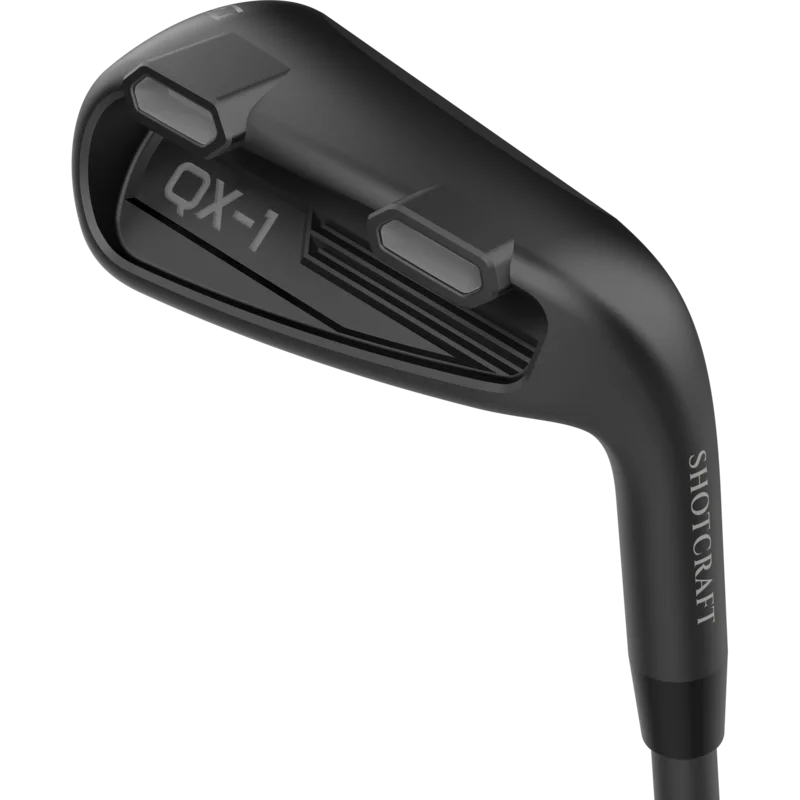
A 68 degree lie angle, far more upright than a traditional wedge and nearly identical to your putter. You get the same stroke you already trust. Two stabilizing bars on the sole keep the face square through contact.
Light clubheads and thin soles require timing and wrist manipulation to make ball then turf contact. You get flippy with the hands instead of using the big muscles in your arms and shoulders. Contact goes inconsistent, nerves arrive, and the chipping yips move in.
A 332 gram head, similar to a mallet putter. The weight engages the big muscles automatically and takes your hands and wrists out of the stroke, exactly like putting.
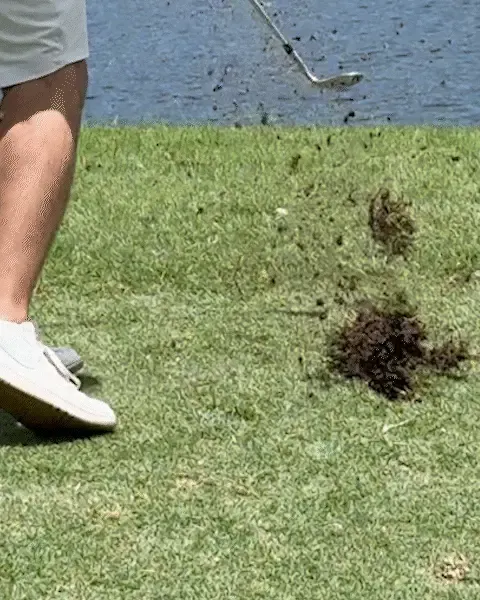
Regular wedges and irons are designed to be swung at full speed and take a divot, so they have narrow soles and sharp leading edges. Hit two inches behind the ball and the edge digs into the turf like a garden spade. The club stops and the ball barely moves.
Thump Sole technology: an ultra wide 1.1 inch sole with a deep bevel on the leading edge, engineered to glide across turf instead of digging or bouncing. The strike stays playable even when your low point is not perfect.

Traditional wedge

QX-1
How far away do I stand? Do I choke down? Where should the ball be? Every one of those questions is a small dose of doubt, and doubt is a confidence killer. When you get tentative over a short shot, nothing good happens.
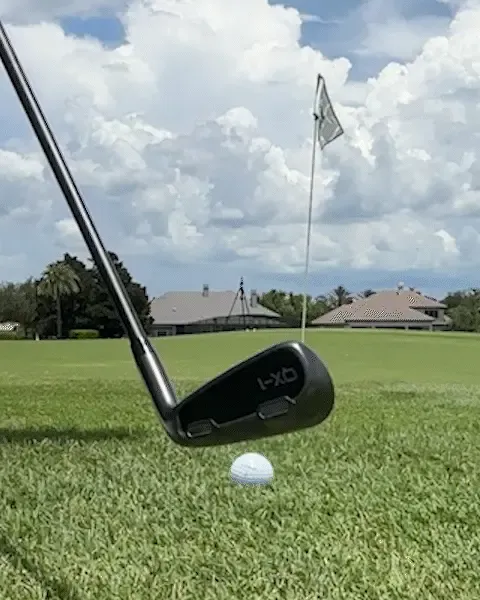
The upright lie and shorter 34 inch shaft let you set up to every chip and pitch almost exactly like you set up to putt. Same posture, roughly the same ball position, same distance from the ball. Whether it is a 10 yard chip or a 30 yard pitch, you set up and swing.
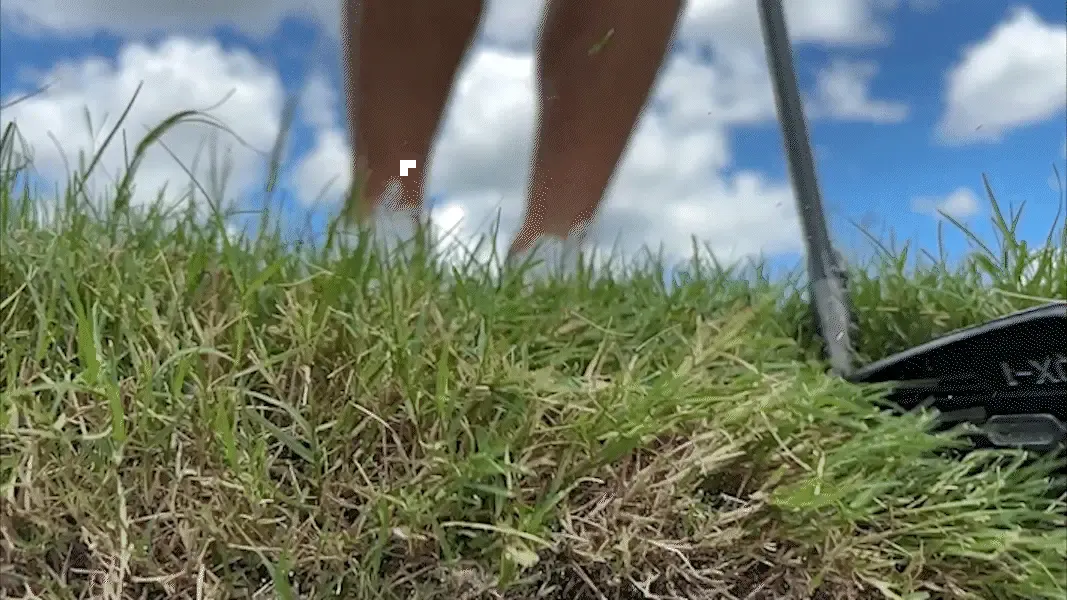
One club, one swing, from 10 yards to 50
Fix those four things at once and the three shots above stop being three different problems. They become the same shot, three different lengths.
Short chip, short stroke. Medium chip, same swing, medium stroke. A 40 yard pitch, same swing, longer stroke. Exactly like putting from different distances, where you never change your technique, only the length of the stroke.
No more deciding between your 56 degree, your 8 iron and your sand wedge. No adjusting your stance, your grip or your ball position for every different shot around the green.
Where a single club now covers you
- Tight lies off the fringe
- Thick rough
- Hardpan
- Pine straw
- Bump and run
- Pitches to 50 yards
- Recovery from waste areas
Who actually built this
This matters, because the golf equipment aisle is full of gimmick chippers.
The QX-1 comes from Josh Boggs, a multi time Golf Digest Hot List medal winner and the same club designer who created equipment for Tiger Woods when Tiger was dominating professional golf, together with Clay Ballard, co-founder of Top Speed Golf, Golf Digest Top Instructor, creator of the Blue Brick training aid, with more than 700,000 YouTube subscribers and 170 million views.
The two of them had already proven the Thump Sole in a bunker wedge, the BX-1, which has sold tens of thousands of units. The QX-1 takes the same sole technology and engineers it specifically for chipping and pitching.
The club would just glide through. It was 100% different than my personal 60-degree wedge. The results were 100 times better. Jeff, a 16 handicap golfer
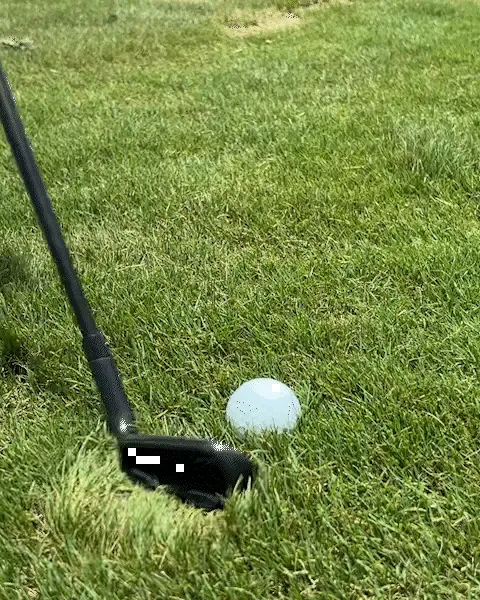
The club, and what is in it
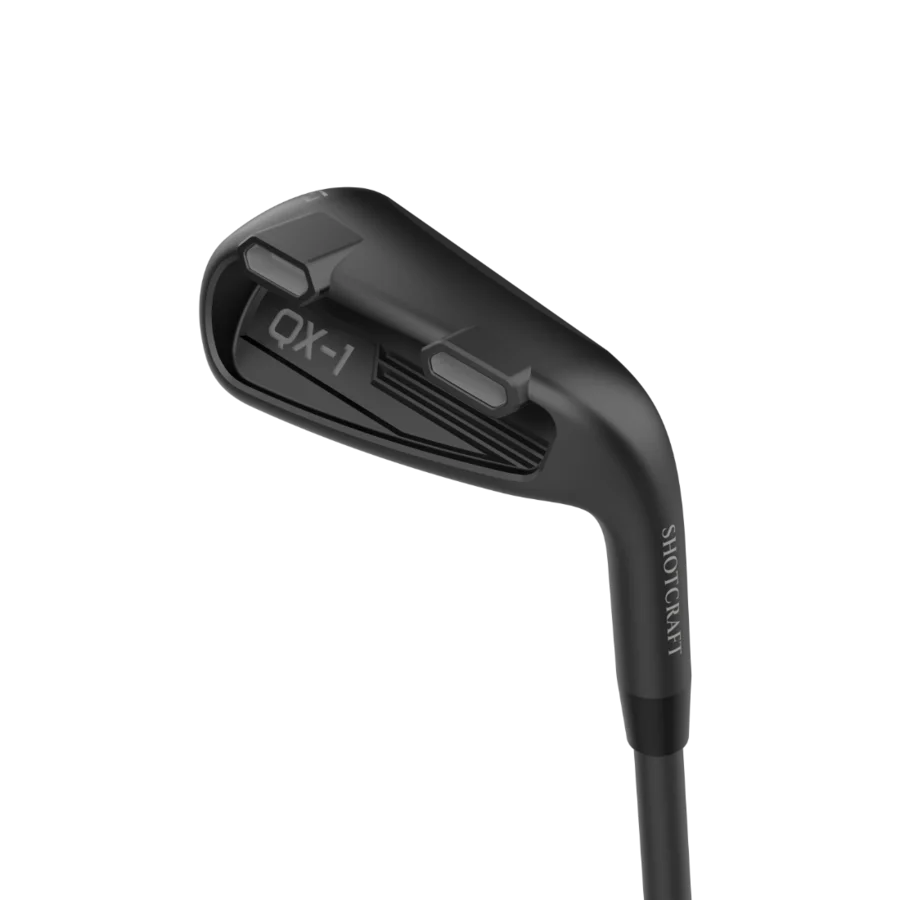
Thump Sole QX-1 Wedge, 47 degree
★★★★★ 4.8 on the Shotcraft product page
- Length34 in
- Loft47° (42° also available)
- Lie angle68°
- Thump Sole width1.1 in
- Head weight332 grams
- ShaftGraphite, wedge flex
- ConformanceUSGA and R&A approved
$149 $189 Save $40 Free U.S. shipping
Takes you to the official Shotcraft Golf offer page for the QX-1.
If you want the full range covered, the 42 degree model is the one for lower running chips and the awkward 50 to 70 yard shots. On its own it is $189, and $119 when it ships in the box with the 47.
What golfers say after the first round
These are customer reviews published by the brand, reproduced as written.
I used to get zero up-and-downs. Since the QX-1, I actually look forward to those shots.
Just played my first round with only 10 minutes of practice and had four up-and-downs. I can already see this changing my short game.
Used mine for the first time today. Saved about 6 strokes and nearly holed out twice.
Went low this weekend. Chipped one in. My buddies are all looking for this club now.
My chipping has been amazing with it! Thank you so much for this club!
I was a skeptic but this club really works!! Just take a normal setup and swing away.
Straight answers to the five questions we get most
Why is this better than a regular chipper?
No other chipper has the Thump Sole. Some have extra width to help them slide over the turf, but width alone does not stop the club digging if you come down a little steep, so you can still hit it fat. The deep bevel on the QX-1 effectively dulls the leading edge, so it resists digging and does not snag in gnarly grass.
Why not just chip with a 7 or 8 iron?
Because those clubs make all four problems worse. Flatter lie angles force you to swing inside and around instead of straight back and through, lighter heads demand perfect timing and wrist manipulation, narrow soles are built for full speed swings and divots rather than touch shots, and you are still guessing about setup, ball position and how far to choke down.
Is it legal for tournament play?
Yes. The QX-1 is fully legal under the Rules of Golf and approved for tournament play. Shotcraft lists it as USGA and R&A approved.
Which club should I take out of the bag for it?
If you keep to the 14 club limit, take out the club you hit least often, or the one that costs you the most strokes. The QX-1 will quickly become your go to club for at least half of your shots around the green.
Is there a learning curve?
There is effectively none, because you already own the stroke. The QX-1 uses the same motion you use on the putting green. Many golfers report cutting strokes the same day they start using it.

The shots you dread are the cheapest strokes on the card
Nothing here is magic. You are not going to hole every chip. What changes is that the shot stops being a coin toss.
You get the same confidence over a 15 yard pitch that you already have over a 6 inch putt, because you are making the same stroke with a club that will not dig. That is the whole idea, and it is why the promise attached to it is a specific number rather than a vague one: three to five strokes a round, starting with the first round you play with it.
Takes you to the official Shotcraft Golf offer page for the QX-1.